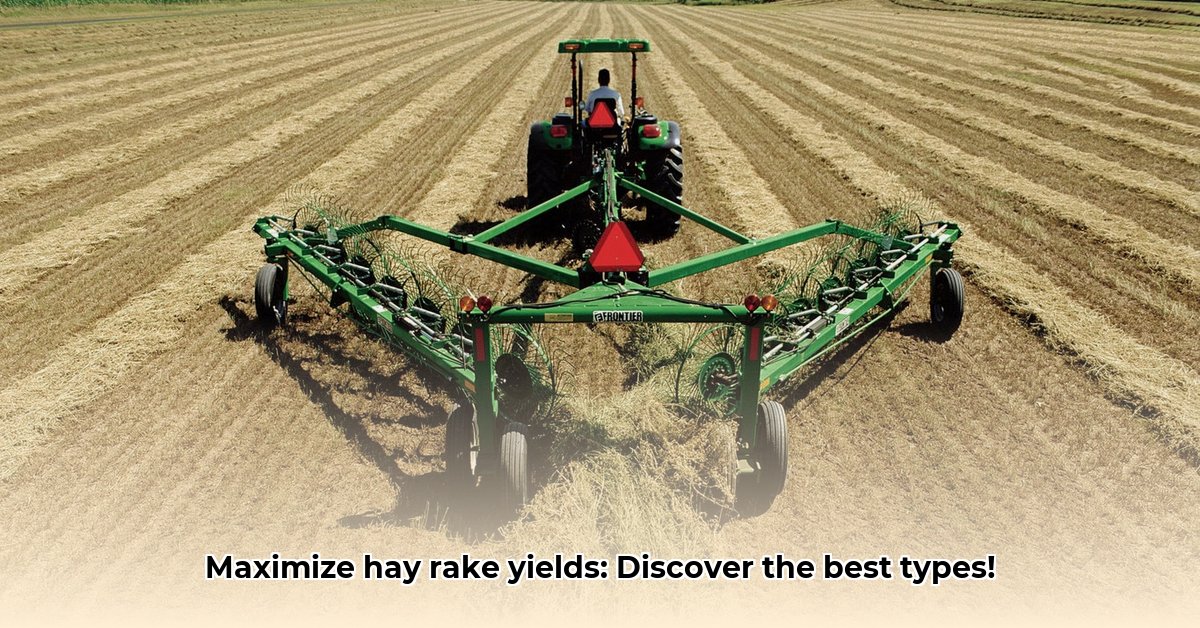
Choosing the right tractor hay rake is crucial for maximizing hay yields and minimizing losses. This guide will help you navigate the different types available, their applications, and how to select the best option for your farm. We'll cover wheel rakes, parallel bar rakes, and rotary rakes, providing a detailed analysis to ensure a bountiful harvest. For more in-depth information, check out this helpful resource: Hay Rake Guide.
Understanding Your Haymaking Needs: A Crucial First Step
Before selecting a hay rake, assess your farm's unique characteristics. This crucial step ensures you choose the right tool for the job, maximizing efficiency and profitability. Several factors influence this decision:
- Hay Type: Are you harvesting alfalfa, timothy, or another variety? Different hay types have varying stem strengths and lengths, impacting rake choice. Delicate hay, for instance, requires a gentler approach than robust varieties.
- Farm Size & Terrain: Do you manage vast fields or smaller pastures? Is your land flat, rolling, or hilly? Terrain significantly influences the suitability of different rake types. Wheel rakes excel on flat terrain, while parallel bar rakes are more suited for uneven ground.
- Budget: Hay rakes vary greatly in price. Consider not only the initial purchase cost but also ongoing maintenance and fuel consumption. A more expensive, fuel-efficient model might ultimately save you money in the long run.
This initial self-assessment is vital. It’s like choosing the right hammer for a job – you wouldn’t use a tack hammer to drive in a fence post! A thorough pre-purchase analysis streamlines the selection process.
Top 3 Tractor Hay Rake Types: A Detailed Comparison
The market primarily features three types of tractor hay rakes: wheel, parallel bar, and rotary. Each offers unique advantages and disadvantages. Understanding these differences is key to maximizing your hay harvest.
Wheel Rakes: Speed and Efficiency for Large Operations
Wheel rakes are known for their speed and high capacity, making them suitable for large-scale operations where covering significant acreage quickly is essential. Their design allows for rapid hay gathering.
- Pros: High speed, large capacity, relatively low initial cost.
- Cons: Potential for crop damage, higher soil disruption, less suitable for delicate hay or uneven terrain.
Quantifiable Fact: Studies show wheel rakes can process up to 30% more acreage per hour than parallel bar rakes in ideal conditions. However, this increased throughput often comes at the cost of leaf loss and soil compaction.
Parallel Bar Rakes: Gentle Handling for Quality Hay
Parallel bar rakes offer a gentler approach, minimizing damage to delicate hay crops and reducing soil disturbance. This leads to higher-quality hay with minimal leaf loss.
- Pros: Minimizes crop damage, gentler on the soil, preserves hay quality, ideal for uneven terrain.
- Cons: Slower operating speed, higher purchase price compared to wheel rakes, lower capacity.
Expert Quote: "Parallel bar rakes are the preferred choice for preserving hay quality, especially when dealing with fragile varietals," says Dr. Emily Carter, Agricultural Engineering Professor at Purdue University.
Rotary Rakes: Masters of Hay Conditioning and Faster Drying
Rotary rakes excel at conditioning hay for faster drying. Their rotating tines fluff and spread the hay, maximizing sun and wind exposure. This crucial conditioning step greatly reduces drying time, mitigating spoilage risks, particularly in areas with unpredictable weather patterns.
- Pros: Excellent hay conditioning, promotes fast drying, improves hay quality by reducing leaf loss.
- Cons: More complex design and higher maintenance costs, some terrains may present challenges.
Rhetorical Question: Isn't minimizing drying time crucial in regions prone to sudden rain showers, ultimately safeguarding your investment? Rotary rakes provide a solution to this very real concern.
Choosing Your Ideal Rake: A Step-by-Step Guide
Selecting the right hay rake involves a methodical approach. Follow these steps to ensure a well-informed decision that benefits your farm’s unique needs.
- Self-Assessment: Thoroughly evaluate your farm's size, terrain, hay type, and budget (as discussed earlier).
- Type Comparison: Carefully weigh the pros and cons of each rake type based on your assessment. Match the rake's capabilities to your farm's specific requirements.
- Feature Focus: Explore additional features like adjustable windrows, hydraulic controls, and different tine spacing to further optimize performance.
- Maintenance Consideration: Investigate maintenance schedules and potential costs. A seemingly lower initial cost can be offset by high maintenance expenses over time.
- Expert Consultation: Consult with experienced farmers or equipment dealers. They can offer invaluable insights based on their field experience.
- Test Run (If Possible): If feasible, arrange a test run in your field to evaluate performance under real-world conditions. Renting before buying is often a smart strategy.
Long-Term Sustainability and Operational Efficiency
Your hay rake choice significantly impacts your farm's long-term sustainability and operational efficiency. Consider these factors for responsible and profitable hay production:
- Fuel Efficiency: Select a rake and tractor combination that minimizes fuel consumption, reducing operating costs and environmental impact.
- Maintenance Costs: Invest in a durable rake that requires minimal repairs and downtime, maximizing overall profitability.
- Environmental Impact: Evaluate the rake's life cycle – from manufacturing and materials to potential recycling options – to minimize your environmental footprint.
By diligently following this guide and carefully considering your farm's specific needs, you’ll select the optimal hay rake, leading to increased yields, higher-quality hay, and enhanced long-term sustainability. Remember, the best rake is the one that perfectly aligns with your operation.